This Rankability review starts with a correction. We wrote the first version in April 2025, when Rankability was a content optimization tool with three features and plans starting at $149.
That tool is gone.
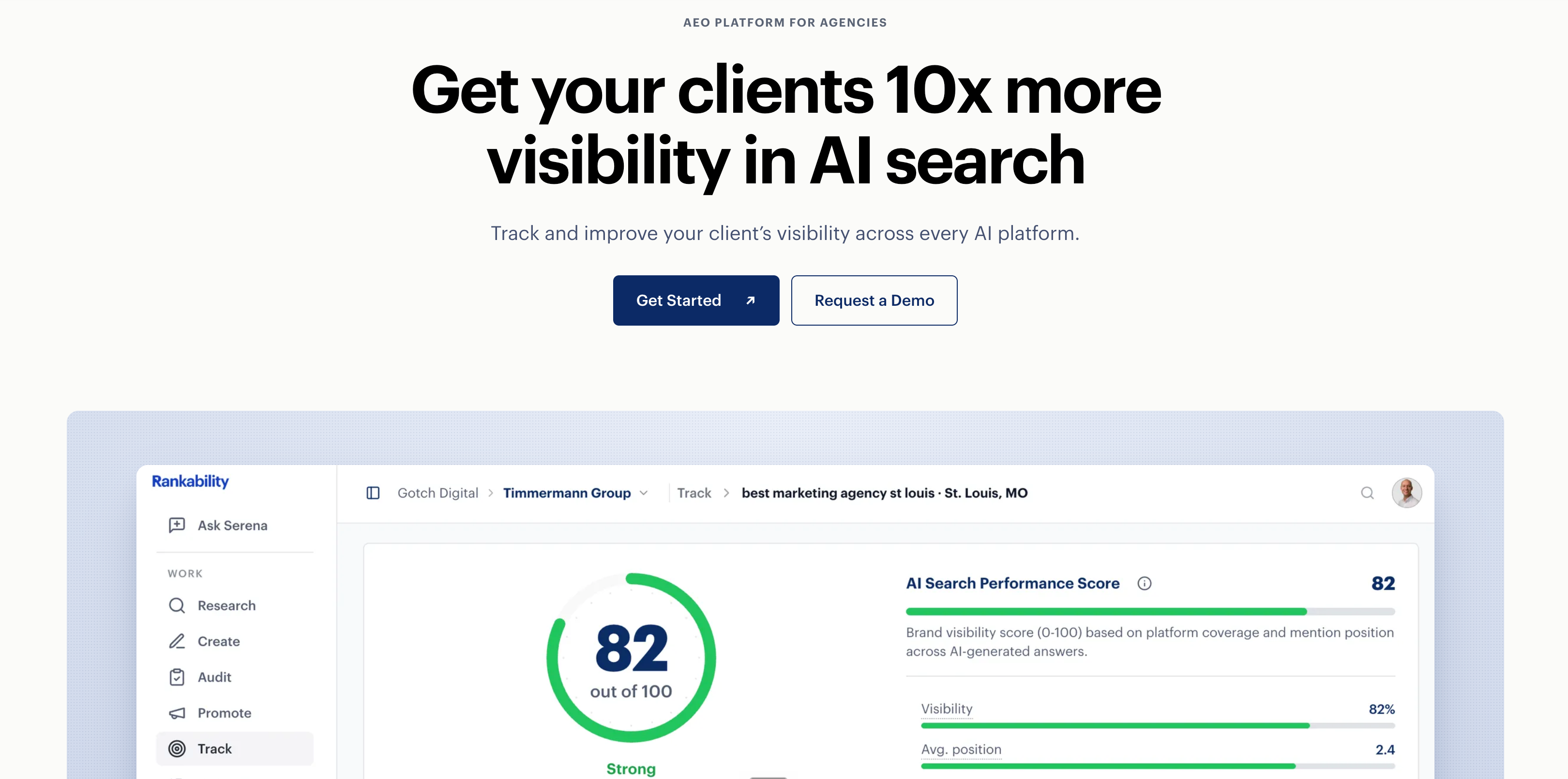
Rankability is now an SEO and AI-search visibility platform built for agencies. It changed its pricing again on October 7, 2026. If a review quotes $149 or $199 plans, it's out of date.
We use Rankability inside WFPulse for client work. Here's what it does now, what it costs, and who should skip it.
Rankability review: the short answer
Rankability is worth it if you run an agency and your bottleneck is content that ranks in Google and gets cited by AI platforms. It's not worth it if you publish a few posts a month or mainly need backlink data.
- Best for: agencies, consultants and in-house marketing teams managing several sites
- Price: $97, $297 or $497 a month
- Strongest feature: content optimization with real-time content scoring, now paired with AI mention and citation monitoring
- Biggest catch: no free trial, and allowances are shared across clients
What Rankability is now
The platform puts keyword research, content creation, technical SEO auditing, backlink monitoring, tracking and client reporting in one place. Every account gets its own client workspace with its own data, sources and brand voice.
The agency workflow is simple. Ground the brand. Research. Create or optimize. Review. Publish. Measure.
Here's everything inside, module by module.
Research
Keyword research, competitor analysis, keyword gaps and domain keyword exploration, built on live SERP data. Each opportunity gets a score, and you save keywords into lists per client.
Some reviewers say keyword research is the weakest module, and that's fair. You get fewer metrics than Ahrefs or Semrush. It's built to feed content creation, not to replace a research suite.
Create
This is the old content optimizer, grown up. You can build a new page from automated content briefs, refresh an existing page, or import a page from its URL and optimize it. Content types are split by intent: Educate, Discover, Compete and Convert.
You pick how hands-on you want to be. Quick mode uses the AI writer to draft for you. Write it myself mode gives you the brief and the score while you write. An editor review checks the draft before it ships, version history keeps every change, and finished work exports or publishes, including native WordPress blocks and page builders.
Audit
Four auditors in one place:
- Site Auditor: technical crawl, up to 1,000 pages per audit
- Page Content Auditor: semantic content auditing of one page against what ranks
- Google Business Profile Auditor: local profile health
- Batch URL Analyzer: a list of URLs at once
Use the Site Auditor to check the technical basics that hold pages back: status codes, redirects, canonicals, duplicate content, robots directives, indexability, crawl depth, internal linking and schema. Check AI-bot access too. If your robots directives block AI crawlers, no tracker will fix that.
Great content can't rank if search engines can't crawl it. But a clean technical audit does not guarantee an AI citation either. It just removes the reasons you'd be skipped.
Promote
Backlink Profile tracks referring domains, anchor text and top linked pages. Prospector builds outreach lists. It's monitoring and prospecting, not a backlink index. If you need deep backlink data, keep Ahrefs or Semrush.
Track
The Tracker gives you one view for every place a client can show up:
- Traditional search tracking for Google rankings and video results
- Local Pack tracking on map grids
- AI answers and AI citations across 11 AI platforms
- Search Performance Index (SPI), one visibility score that rolls it all together
- Google Search Console and GA4 connections for low-hanging fruit, content decay alerts, and organic vs AI referral traffic
- Bing Webmaster Tools and benchmark reports
Content decay detection is the closest thing to the old Content Monitor feature. It flags pages that are slipping so you can refresh them before rankings fall.
Serena
Serena is an AI advisor that works from each client's data, sources and connected accounts. Ask it questions, get recommendations on what to do next, and turn repeat work into saved workflows. Serena chat is included on every plan.
Automate
Queue scheduled content and monitor approved knowledge sources on a recurring basis.
Agency tools
Portfolio performance across every client, a client portal, branded, white-labeled reporting, client approvals, team and client access controls, an Asana handoff, and a built-in lead generator for prospect reports. Every plan includes unlimited users and unlimited client workspaces.
Agent API and MCP
Almost every module has an Agent API endpoint: tracking, research, backlinks, crawling, site audits, content jobs, optimization and Serena. The hosted MCP connection lets you run all of it from Claude or Codex with nothing to install.
Two details worth knowing. The docs tell developers to read the rate-limit headers on each response, and to run a read-only verification prompt before an agent starts billable work. Work done through the Agent API or MCP uses the same allowances as the app.
The old version did one job well. This version wants to be the operating system for an SEO agency.
The content optimizer is still the reason to buy
Content optimization is where this tool earned its name, and it's still the best part. You give it a keyword. It analyzes the pages ranking for it. Then it gives your draft real-time content scoring against them.
The score measures relevance. Under it you get NLP recommendations and entity-based semantic analysis, which checks the entities competing pages cover (people, products, places, concepts), not just keywords. That's competitor analysis built into the editor. You see how competitors structure the topic and where your draft is thin.
Our original review said the optimizer leaned on Google NLP and IBM Watson's NLP. The current docs don't say what powers it, and honestly, the output is what matters.
Treat the score as an editing input, not proof. Better coverage makes a page more likely to drive rankings, traffic, and visibility, but content quality, original experience and authority still decide close calls. That lines up with Google's people-first content guidance.
AI mention and citation monitoring
This is the biggest addition since our first Rankability review.
The platform tracks whether your brand shows up in AI answers across 11 AI platforms: ChatGPT, Google AI Mode, Google AI Overviews, Claude, Perplexity, Gemini, Grok, Microsoft Copilot, Brave AI, DeepSeek and Meta AI. It records brand mentions, AI citations and sentiment for each one.
This is the measurement side of Generative Engine Optimization (GEO), the work of getting a brand into AI-generated answers. For agencies, AI mention and citation monitoring is a report most clients have never seen. "Were we recommended in ChatGPT last month?" is now a question you can answer with data.
Keep one thing in mind. A mention or citation report is a sample, not a complete record of every AI answer. Results shift by prompt, location and time, so read the trend, not one week.
The Search Performance Index also folds local and video visibility into the same picture, so the client gets one number and you keep the detail.
Rankability pricing review: what you actually get (October 2026)
Rankability moved to three self-serve plans on October 7, 2026. You can pay monthly or yearly. A year costs the same as ten months.
| Starter | Agency | Agency Pro | |
|---|---|---|---|
| Monthly | $97 | $297 | $497 |
| Annual | $970 | $2,970 | $4,970 |
| Client workspaces and team members | Unlimited | Unlimited | Unlimited |
| AI platforms tracked | 11 | 11 | 11 |
| Tracked AI queries | 100 | 300 | 500 |
| Tracked Google keywords | 50 | 150 | 250 |
| Content projects per month | 20 | 80 | 160 |
| Page audits per month | 20 | 80 | 160 |
| Site audits per month | 2 | 10 | 25 |
| Local Pack scan units per month | 10 | 30 | 50 |
| Agent API and MCP | Included | Included | Included |
| Onboarding | Self-serve | One session | One session plus campaign planning |
| Gotch Inner Circle coaching | No | No | Annual plan only |
Do the per-client math. At $297 across ten active clients, the software costs $29.70 per client per month before labor. Compare that with the tools it could replace, like Clearscope or a separate rank tracker, not with the sticker price.
Unlimited clients does not mean unlimited usage. Every allowance is shared across clients on your account. Ten clients on Starter split 20 content projects a month. Size the plan to your total workload.
There's no free trial. The closest test is one paid month of Starter. Monthly plans cancel in Billing and you keep access through the period you paid for.
Check Billing for your plan coverage. Plan packaging changed several times in 2026, and you'll find pricing-page inconsistencies between the site, the help docs and older reviews. Billing shows what your account actually includes.
That's the honest Rankability pricing review: fair for agencies with a full client roster, expensive for anyone running one site.
How to test Rankability in your first paid month
Every Rankability review tells you to try before you buy. With no free trial, run your paid month of Starter like an independent benchmark.
- Pick two to five client accounts with different needs, like a local service business, a professional service and a content-led site.
- Record a baseline first: rankings, indexed pages, conversions, technical issues and AI visibility.
- Run the same pages and target queries through Rankability and whatever you use now, including your keyword research and Site Auditor findings.
- Test the handoff your writers actually use. If they draft in Google Docs, see how cleanly work moves into the editor and back out.
- Track time spent researching, briefing, editing and reporting, and note bad recommendations, not just good ones.
- Judge results on qualified traffic, leads, calls and booked work. Revenue attribution still depends on your analytics and CRM integration, not the SEO tool. A software score is not a KPI.
Treat any case study on a vendor's own site as a vendor-published data point, not proof. Your benchmark is the proof. If it saves your team real hours by the end of the month, upgrade. If it doesn't, cancel in Billing.
Rankability review: pros and cons
Pros
- Content optimization is still one of the best in the category
- AI mention and citation monitoring across 11 AI platforms on every plan
- Unlimited users and client workspaces, so no per-seat math
- Site Auditor, backlink monitoring, tracking and reporting live with the content work
- Agent API and MCP included, so it plugs into Claude and agent workflows
- Built by people who run agency client work, and it shows
Cons
- No free trial
- Allowances are shared across clients and get tight fast on a low plan
- Not a backlink index, so keep Ahrefs or Semrush for deep link research
- Keyword research is thinner than a dedicated research suite
- A real learning curve, because there's a lot of platform here
- No native mobile app
- Coaching only comes with annual Agency Pro
Rankability vs the alternatives
Rankability vs Surfer SEO. Both are content optimization tools at heart. Surfer SEO is cheaper to start with its Surfer Discovery plan. Rankability includes unlimited users, the Site Auditor, backlink monitoring and broader AI tracking. One writer? Surfer is easier to justify. A team and a client roster? Rankability's pricing works out better.
Rankability vs Clearscope and Frase. Clearscope and Frase focus on briefs and content scoring. If content optimization is all you need, they're simpler. Rankability makes sense when you also want keyword research, audits, tracking and client reporting in the same place.
Rankability vs Ahrefs and Semrush. Different jobs. Ahrefs and Semrush own backlink data and keyword databases at scale. Even Ahrefs Lite gives you a backlink index Rankability doesn't try to match. Rankability is built around producing and optimizing pages and proving the result. Plenty of agencies run one of each.
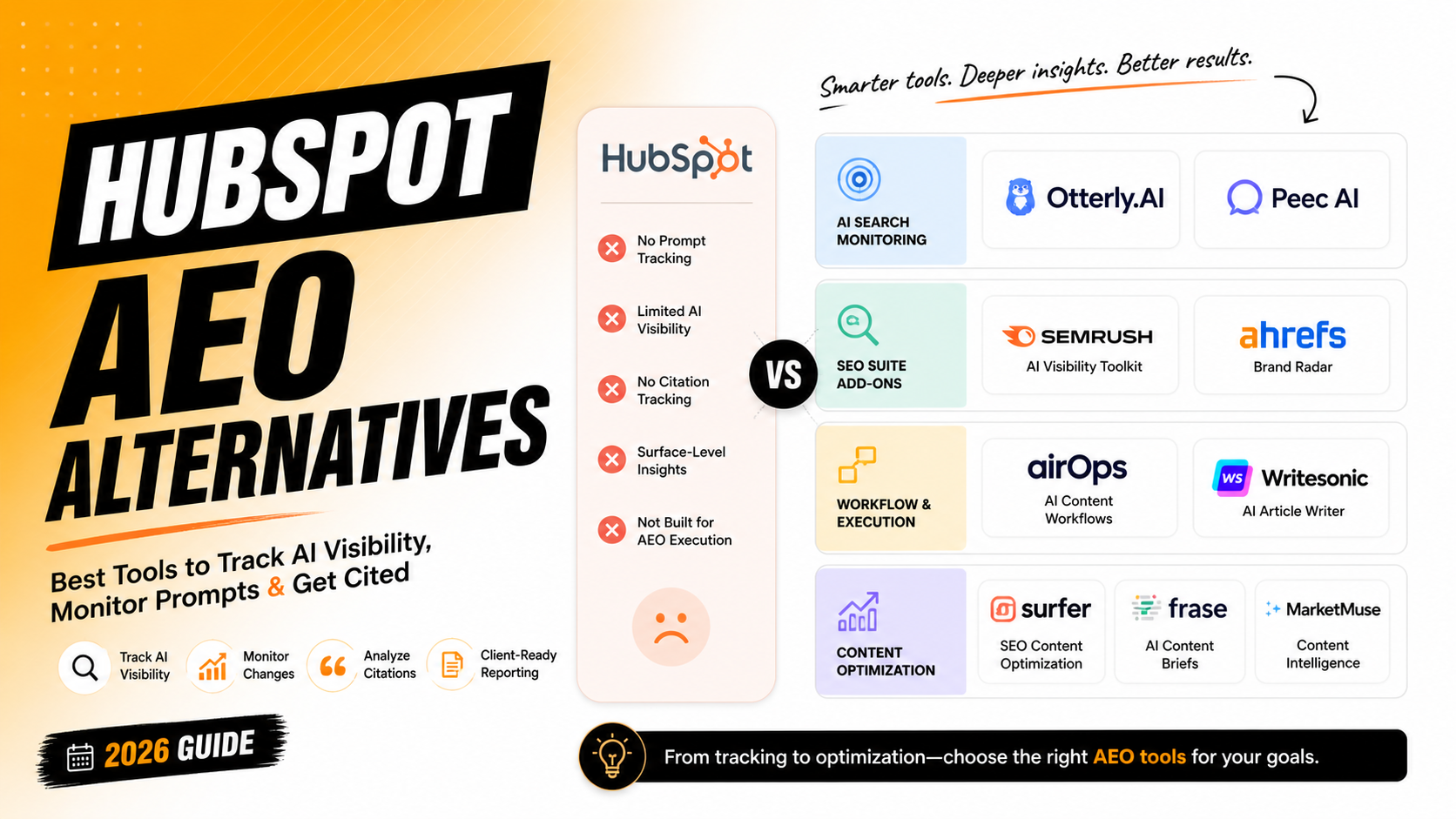
Rankability vs AI visibility trackers. Profound, Gauge, Wellows, Peec AI, Otterly AI and ZipTie.dev focus on AI search monitoring. If you only need to track a brand in AI answers, a dedicated tracker may fit better. If you need to track it and then fix it with content, audits and outreach, Rankability covers both.
Rankability vs local rank trackers. For heavy map-grid work across many locations, a specialist like Local Dominator goes deeper. For most agencies, Local Pack tracking here covers the basics alongside everything else.
Who should buy Rankability
- Agencies selling SEO or AEO to multiple clients
- Consultants who need white-labeled reporting that includes AI mention and citation monitoring
- In-house marketing teams with several writers who are tired of paying per seat
- Operators who want their SEO tools inside Claude or an agent workflow
Who should skip it
- Solo site owners publishing a few posts a month
- Anyone whose main need is backlink data
- Teams that need a free trial before paying
Business owners: ask your agency this first
If you own a service business and your agency wants to add Rankability (or any SEO software) to your bill, a new dashboard isn't the first priority. Working conversion tracking, clean technical foundations, an accurate Google Business Profile and pages that match your services come first.
A tool can flag a problem. It can't fix one. Before you approve another subscription, ask:
- What specific problem will this solve?
- What will you change on my website because of it?
- Who does the work once it finds something?
- How will we measure calls, inquiries and booked jobs?
- Which subscription does it replace?
Get the plan, the price and the renewal terms in writing.
Our Rankability review verdict
Rankability grew from a sharp content optimization tool into a real SEO and AI-search visibility platform for agencies. The optimizer is still the best part. AI mention and citation monitoring is the reason to look again if you passed on it before.
If you run an agency and content is your bottleneck, put it on the shortlist. If you're still deciding whether SEO is worth paying for, start somewhere cheaper.