
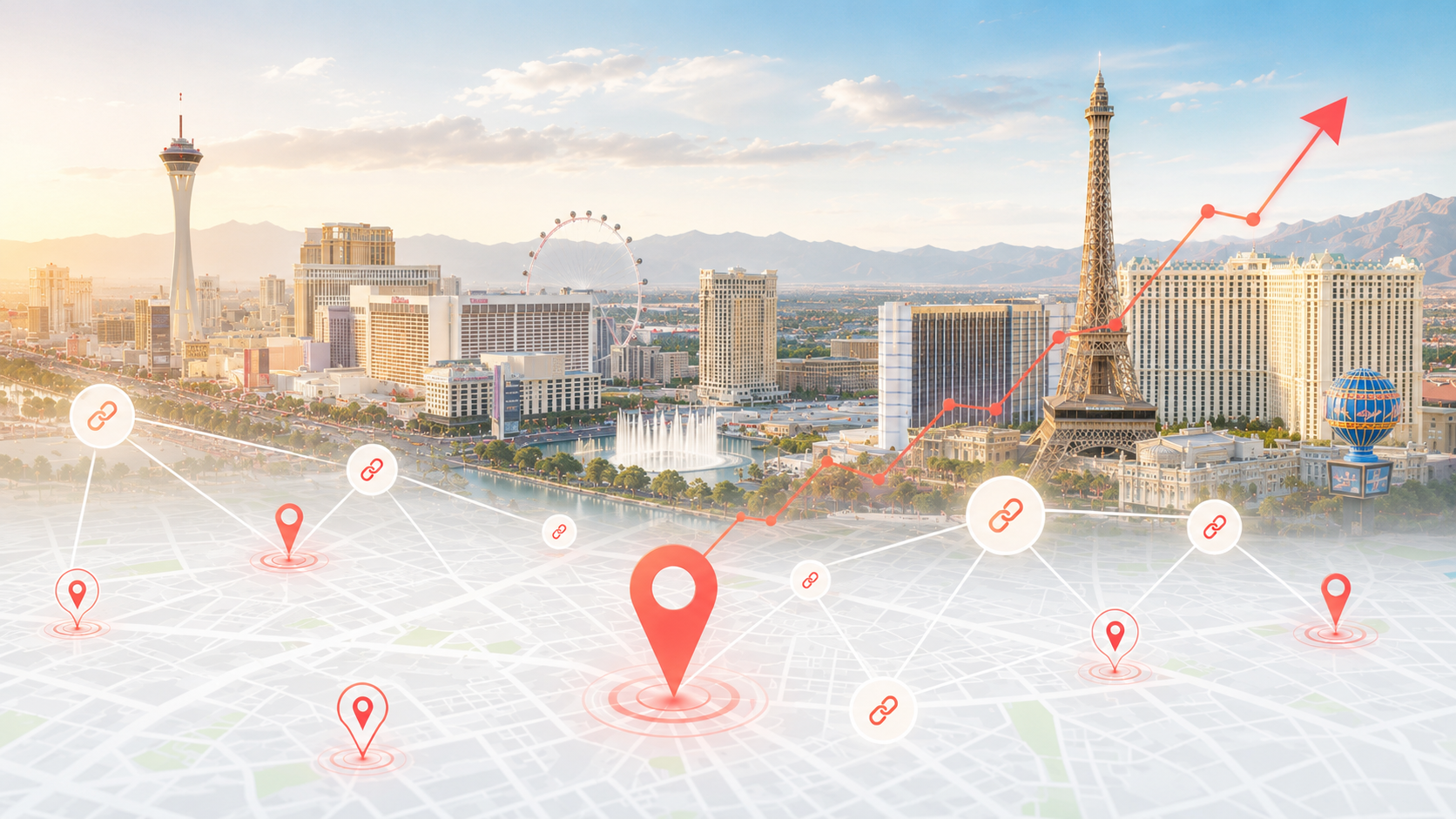
A lot of Las Vegas business owners hit the same wall: their Google Business Profile is active, their service pages exist, and rankings still stall. When you work through a Las Vegas local link building playbook (how to earn local authority links that move map pack + organic), the missing piece is often not more content, but stronger local authority signals pointing at the right pages.
I have seen this especially with service-area business sites that already cover the basics but lack third-party trust from the local web. This guide explains what local links actually influence, where to find them in Las Vegas, how to earn them without spam, and how to measure whether they are moving map pack rankings and leads.
Why Local Links Still Move the Needle in Las Vegas
Local links influence prominence, and prominence affects whether Google sees your business as notable enough to compete in local results. Google’s local ranking guidance describes rankings as primarily based on relevance, distance, and prominence, and prominence can include signals like links and reviews.
That distinction matters because many businesses blame local backlinks for weak visibility when the real issue is relevance, on-page SEO, or conversion friction. A weak page with vague service copy, poor site structure, or no proof will not suddenly win because a chamber page linked to it.
A local authority link is not just any backlink from a website with a domain metric. A useful local link usually combines geographic relevance, topical fit, real traffic, and real trust, which is why a mention from a Las Vegas association or neighborhood publication can outperform a random national directory.
This is where SERP analysis gets practical. In many Las Vegas verticals, the businesses that hold steady in both the map pack and organic results are not always the ones with the most links, but the ones with the most believable local signals across links, reviews, content, and entity consistency.
That also explains the debate around links in local SEO. Some operators see marginal gains because their fundamentals are broken, while others see big lifts because links are layered onto a site that already has strong relevance, good UX, and Ongoing Webflow support and maintenance to keep sites evolving.
Map Pack vs Organic: What Links Help Most
For the map pack, links usually work indirectly through prominence and entity validation rather than as a simple ranking lever. A brand mentioned by local news sites, event partners, and trusted community pages looks more established, and that brand strength often supports local visibility.
For organic rankings, links remain a core authority signal, especially for competitive service terms. A locally relevant link to a strong page can help more than a bigger but less relevant source, particularly when site speed, internal linking, and search intent alignment are already handled.
Citations vs Backlinks (And Why People Confuse Them)
Citations validate business identity through NAP consistency, which means your name, address, and phone details match across the web. They help Google trust the existence and location of the business, but they are not a replacement for editorial backlinks that pass authority and context.
The confusion happens because the best local placements can do both jobs at once. A chamber profile, association listing, or local partner page may support NAP consistency while also giving you a clickable link that contributes to trust, referral traffic, and authority.
Pre-Link Checklist: Build a Linkable Local Foundation First
Before outreach starts, the destination page has to deserve the link. If the page is slow, generic, or vague about service and location relevance, you may earn a placement that produces no ranking lift and no business value.
That is why I treat links as amplifiers, not repairs. The Google Map Pack rewards businesses that align entity signals well, and the linked page should reinforce the same categories, services, and geography shown in your Google Business Profile.
For most local businesses, the best foundation includes one strong homepage, several clean service-area pages, and two or three editorial link targets beyond sales pages. Resource pages, local guides, data pages, and proof assets give publishers something useful to cite, which makes relationship-based outreach far easier.
Conversion clarity matters just as much as rankings. We ensure your site converts, focusing on tangible business outcomes like leads, bookings, or sales, because a link campaign that sends visitors to a confusing page wastes the authority you worked to earn.
A tracking plan should exist before the first email goes out. Record baseline rankings, calls, form submissions, referral traffic, and branded search demand, then add lead tracking so you can separate link impact from other changes.
For broader context on local visibility systems, review this las vegas local SEO playbook map pack domination checklist. Link building works better when it supports a full local search framework rather than operating alone.
Pick the Right Link Targets (Not Just the Homepage)
Service-area pages often make the best relevance targets because they align with commercial queries. Still, outreach acceptance rates usually improve when you pair those pages with a resource hub or guide that gives editors a non-promotional reason to link.
Every local business should also build one proof page. A case study, project gallery, or results page gives partners and journalists something specific to reference, which increases both trust and link placement odds.
Local Relevance Signals to Bake Into Pages
Las Vegas-specific details make a page easier for both users and search engines to interpret. Neighborhood references, local landmarks, permitting rules, and city-specific FAQs turn generic service copy into location evidence.
Schema helps clarify those signals. Organization schema and LocalBusiness schema will not replace authority, but they make your entity details easier to reconcile across your site, your GBP, and the pages that mention you.
Prospecting: Where Las Vegas Authority Links Actually Come From
The best Las Vegas links usually come from organizations that already matter offline. Chambers, schools, venues, charities, suppliers, event ecosystems, and local publishers beat most “SEO sites” because they have actual audiences and editorial standards.
This is where local SEO intersects with business development. A prospect list built by relationship type often produces better wins than a list built only by domain metrics, because local authority is frequently earned through existing trust rather than cold pitches alone.
My view here comes from operating in this market as a Las Vegas native with deep roots, bringing hands-on experience from owning multiple local Las Vegas businesses, giving me a business-owner’s perspective on SEO and strategy. In Las Vegas, the strongest links often sit one relationship away, not ten search operators away.
Prospecting should still be disciplined. Search intent, topical fit, technical SEO quality, local audience relevance, and outbound link patterns all matter, because a local page with weak standards can dilute effort even if it looks geographically relevant.
Community sponsorships remain one of the most reliable local plays when chosen carefully. Sponsorship-based link opportunities are widely used as a local SEO tactic because they can earn placements from community sponsorship pages and other local organization sites that reinforce trust and local relevance.
Competitor backlink analysis speeds this up. If three top-ranking local competitors all earned links from the same business association, media outlet, or vendor page, that pattern tells you the market already recognizes those sources as legitimate.
High-Probability Las Vegas Link Sources (By Category)
Local business groups remain high-value because they combine trust, local relevance, and discoverability. Start with a chamber of commerce profile, the Las Vegas Metro Chamber of Commerce, the Henderson Chamber, and neighborhood associations that maintain active member pages.
Local institutions often have stricter standards, which is why their links matter more when earned. UNLV departments, alumni pages, scholarship pages, and local libraries can produce durable placements if your contribution is real, but avoid thin scholarship links created only for SEO.
Media and discovery sources are often underused. Event listings, community calendars, newsletters, local podcasts, and local publisher roundups may not look glamorous, but they frequently generate both links and branded searches.
Competitor Backlink Gap Workflow
Export competitor referring domains and tag each one as local, industry, or generic. That simple classification shows whether top performers are winning through city authority, niche authority, or a mix of both.
Then recreate only what is defensible. If a competitor earned a link through a partnership, sponsorship, digital PR mention, or community page, you can pursue a similar path without copying low-value tactics.
The Playbook: 8 Repeatable Tactics to Earn Local Links (No Spam)
The most reliable local link building systems solve a publisher’s problem first. If your pitch improves their page, event, article, or audience experience, your odds rise fast and your placements age better.
Use a mix of quick wins and compounding plays. Testimonial links and vendor pages can land faster, while digital PR, workshops, and resource assets build momentum over time.
Keep anchor text natural. Brand anchors, naked URLs, and partial-match anchors look more credible than repeated exact-match anchor usage, and placement quality matters far more than forcing a keyword.
Track every outreach, response, and placement. A documented system reveals which offers work in Las Vegas and which categories waste time.
Tactic 1: Local Partnerships and Vendor Links
Suppliers, distributors, and software partners often have partner directories, case studies, or testimonial pages. Testimonial links work best when you provide specifics, photos, measurable outcomes, and a reason their audience would care.
Tactic 2: Sponsorships That Earn Editorial Pages
Sponsor local leagues, meetups, and charity events that publish clickable sponsor pages. The strongest sponsorships also create recap posts, photo galleries, and recurring partner pages, which multiply link value over time.
Tactic 3: Local PR Hooks (Data, Trends, and Expert Quotes)
Create a Las Vegas-specific angle that a journalist can cite quickly. Pricing trends, seasonal demand shifts, or a practical safety checklist give local media a reason to mention you beyond a generic business profile.
Tactic 4: Local Resource Pages and “Best Of” Lists (Ethical Approach)
Pitch inclusion only when you clearly belong. Editors respond better when you send a short description, accurate hours, photos, and a direct page that reduces their workload.
Tactic 5: Community Content That Locals Reference
Publish guides tied to local friction points. Permit timelines, inspection checklists, HOA expectations, or venue logistics often attract links because they answer questions that many Las Vegas residents and businesses already search.
Tactic 6: Local Events, Workshops, and Co-Marketing
A small workshop with a partner venue can generate links from venue pages, calendars, and post-event recaps. Shared landing pages also create a clean tracking environment for referrals and conversions.
Tactic 7: Testimonials and Case Studies (The Easy Button)
Write specific testimonials for local businesses you actually use and ask whether they feature customers on-site. Combining technical Webflow expertise with results-driven business growth strategies can also make your case studies more citeable when the project includes measurable outcomes.
Tactic 8: Reclaim Unlinked Mentions and Broken Links
Unlinked mentions are often the easiest wins because the publisher already referenced your brand. Broken link building also works locally when you have a current replacement resource that genuinely fits the dead page’s intent.
Outreach That Works: Templates, Offers, and Follow-Up Cadence
Most local outreach fails because it asks for too much and says too little. A strong email identifies who you are, why their page matters, what asset you are offering, and one specific ask.
Local context improves response rates because it proves the email was not automated. Mentioning a recent event, a neighborhood focus, or a specific article often matters more than adding more credentials.
Keep the ask narrow and the asset obvious. Las Vegas publishers are more likely to reply when they can picture exactly where the link fits and why their audience benefits.
If you need a broader view of campaign structure, this what goes into a real las vegas SEO campaign 2026 guide for local growth explains how links fit into a larger growth system.
What to Offer (So It’s Not a Beg)
Offer something publishable, not just a request. An exclusive local data point, expert quote, photo asset, checklist, or co-branded resource gives the editor a reason to act.
A done-for-you snippet also helps. A short summary with attribution and a clean link lowers friction, which is often the difference between a maybe and a live placement.
Simple Follow-Up Cadence
Day 0 should contain one ask and one link. Day 3 to 5 should introduce a new angle or smaller ask, and Day 10 should close the loop politely so you protect deliverability and brand reputation.
Measuring Impact: KPIs That Tie Links to Map Pack and Leads
Link building should be judged by business movement, not vanity counts. A useful KPI stack connects placements to local pack visibility, organic growth, referral traffic, and qualified leads.
Map pack gains often show up as gradual movement rather than instant jumps. Many local SEO timelines report measurable movement in roughly 60 to 90 days, with more typical stabilization closer to 3 to 6 months.
Organic impact is usually easier to isolate. A linked service or location page that climbs into the top 10 for Las Vegas queries often produces measurable non-branded clicks and better lead flow, which is why Local SEO and broader digital growth to drive visibility and leads should be measured together using clean lead tracking and conversion rate reporting.
Attribution still requires caution. Link velocity, review growth, page updates, and GBP activity can overlap, so before-and-after snapshots across Las Vegas, Henderson, Summerlin, and North Las Vegas give you a cleaner read than a single ranking screenshot. When you can, add UTM parameters to outreach links so referral visits and assisted conversions are easier to attribute.
For industries with stricter competition dynamics, this example on how las vegas drug lawyers can win in AI driven local search shows how authority signals interact with local intent and AI search behavior.
Local KPIs to Track
For the map pack, track grid ranking movement, calls, direction requests, and website clicks from GBP. Those metrics show whether prominence gains are turning into local action, not just visibility.
For organic, track non-branded clicks, top 3 and top 10 positions, assisted conversions, and conversions by landing page. The page-level view matters because not every earned link should point to the homepage.
Link Quality Signals (Practical, Not Obsessive)
Use topical fit, geographic relevance, indexation, referral traffic, and editorial context as your main quality filters. Third-party metrics like domain authority, and even spam score, can help triage prospects, but they are not truth and should never override common sense.
Common Mistakes That Kill Local Link Building Results
The fastest way to waste budget is buying low-quality links or blasting weak directories. Those tactics may create short-term movement, but they rarely produce lasting authority and often bury the signal you actually need.
Anchor over-optimization is another common mistake. Repeating exact-match terms and sending every link to one money page creates a footprint that looks manipulative and limits how authority flows through the site.
Technical and on-page gaps also sabotage campaigns. Slow pages, thin service copy, weak internal links, and vague location relevance can block gains even when the link itself is legitimate.
The bigger operational mistake is treating link building like a one-time push. Local authority compounds through repetition, and businesses that publish, partner, and follow up monthly usually outperform businesses that run one sprint and stop.
For some companies, the real issue is that the website itself is not ready for authority. This breakdown of las vegas SEO vs web design what local businesses need first helps clarify when site quality is the blocker.
Red Flags to Avoid
Avoid sites filled with unrelated content, spun articles, or obvious guest-post farm footprints. A local-looking domain with no editorial judgment is still a weak asset.
Be cautious with sponsorship pages that list hundreds of outbound links and show no real community presence. If the organization has no audience, the link is usually just rented clutter.
What to Do Instead
Invest in fewer, better placements. One relevant local page with real readership can outperform dozens of junk links because trust, context, and referral potential are concentrated.
Use internal linking to spread value from earned links to your highest-converting pages. That step is where many local campaigns leave results on the table.
A 30-Day Execution Plan You Can Repeat Monthly
Week 1 should focus on fixing link targets and building the prospect list. Businesses with Specialized in Webflow development with high-level execution often move faster here because page updates, schema changes, and asset creation can happen without waiting on a separate dev queue.
Week 2 is for outreach and follow-ups. Aim for 20 to 40 qualified prospects per month, not hundreds, because local link building is won through relevance and fit more than brute-force volume.
Week 3 is fulfillment. Deliver photos, quotes, testimonials, event details, or resource updates quickly so opportunities do not stall after a yes.
Week 4 is measurement and iteration. Review placements, rankings, calls, form fills, and referral traffic, then double down on the tactics that produced real business outcomes.
The relationship flywheel is the long-term advantage. Every partner, sponsor, vendor, and event can create future mentions, repeat placements, and stronger brand recognition across the Las Vegas web.
A simple operating rhythm beats sporadic effort. If you want local visibility around Las Vegas, consistency usually matters more than chasing one perfect link.
Monthly Checklist (Minimum Viable Consistency)
Add 30 prospects, send 20 personalized outreach emails, secure 2 to 5 placements, and publish one updated linkable asset each month. As a reality check, expert local link building guidance emphasizes that many businesses can compete with a few to a handful of quality links per month, while highly competitive categories may require more.
Review rankings, conversions, and referral traffic every month. Keep the tactics that produce leads, cut the ones that only produce link counts, and treat local authority as a system rather than a stunt.
FAQs
What is local link building and how to earn quality links?
Local link building means earning backlinks from websites tied to your city, service area, or industry. The best links usually come from partners, local organizations, media, events, and resource pages where your business adds real value.
What is the 80 20 rule of SEO?
In local SEO, most gains usually come from a few basics: a strong Google Business Profile, solid service and location pages, consistent citations, and a small set of trusted links. Google’s local ranking guidance centers on relevance, distance, and prominence, and prominence can include signals like links and reviews.
Is link building illegal?
Link building is not illegal. Some tactics violate Google’s guidelines, especially paid manipulative links and link schemes, so the safer path is earning editorial links through PR, partnerships, community involvement, and useful resources.
What are your top 3 link building strategies?
For most Las Vegas businesses, I would start with partnership and vendor links, community sponsorships with real visibility, and local PR built around a city-specific angle. Those three tactics balance speed, trust, and long-term authority.
Local link building works when it strengthens a business that already deserves to rank. If your pages are relevant, your GBP is aligned, and your outreach is tied to real community value, the right links can move both map pack visibility and organic traffic in a way generic backlinks rarely do.
That is the standard we use at WFpulse: Visibility Is Earned, Not Claimed. If you need help with local link building, researching local backlink prospects, or figuring out which opportunities are actually worth pursuing, you can reach out to WFpulse for support.